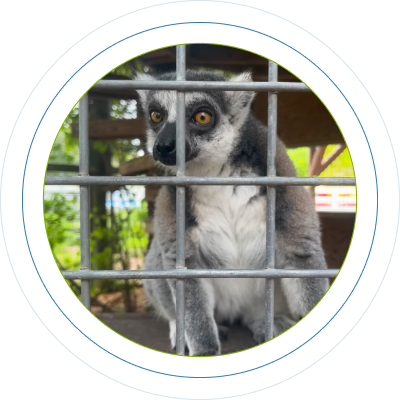
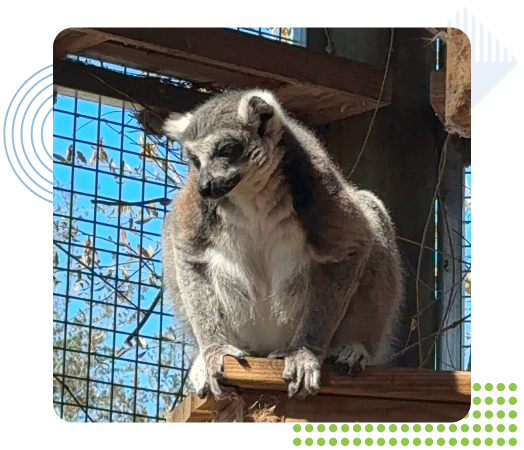
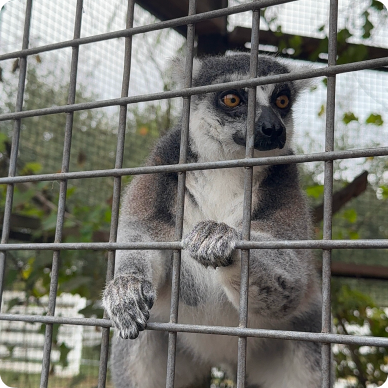
The Rescue Story of Zippy – Ring-tailed Lemur

  • Name

    Zippy
  • Species

    Ring-tailed Lemur
  • Condition at Rescue

    Unknown at intake
  • Disposition

    Always curious
Zippy

Rescued In

July 2011

Rescue Location

Private property housing multiple lemurs

Current Status

Adjusted to life at the Sanctuary with his emotional support cats

Rescue Background Story

Zippy came from a property where several lemurs were kept in an environment that exposed smaller animals to predators such as hawks. The situation created an unsafe living condition and raised concerns about the animals’ protection and long‑term welfare.

The sanctuary stepped in to provide Zippy with a safer habitat where he could receive consistent care and enrichment. Since arriving, he has adapted well to his enclosure and formed a unique bond with two resident cats, Chester and Luna, who share his space and provide companionship.

When you donate or sponsor, you become part of their rescue journey — from survival to sanctuary.

Your kindness gives them the second chance they deserve.

Daily Care & Feeding Details

Morning Feeding

Time: 6:00 AM

Feed Mix:

Fresh fruits and vegetables
Includes spinach, kale, tomatoes, carrots, cucumbers, baby corn, beets, sweet potatoes, grapes, cantaloupe, blueberries, raspberries, blackberries, and strawberries.

Evening Feeding

Time: 6:00 PM

Feed Mix:

Fresh fruits and vegetables similar to the morning diet.
Water bowls checked and refreshed during feeding time.

Fencing & Enclosure
  • Multi‑level enclosure inside the sanctuary Barndominium designed for climbing and exploration.
  • Shared living space with companion cats Chester and Luna.
  • Environmental enrichment and climbing structures inspected regularly.
Water Facilities
  • Fresh drinking water available at all times.
  • Water containers are cleaned and refilled twice daily.
  • Containers placed securely to prevent contamination from food debris.
Hygiene & Cleaning
  • Daily removal of leftover food and organic waste.
  • Enclosure surfaces wiped and sanitized regularly.
  • Routine inspection of bedding and climbing areas.
  • Cleaning schedule adjusted depending on feeding waste to maintain pest control.

Medical Care & Progress Updates

  • Initial health observation completed upon arrival.
  • Routine wellness monitoring by sanctuary veterinary staff.
  • Balanced fruit and vegetable diet maintained daily.
  • Behavior monitored to ensure healthy social interaction.

Additional veterinary records can be referenced through the sanctuary care logs.

Gallery